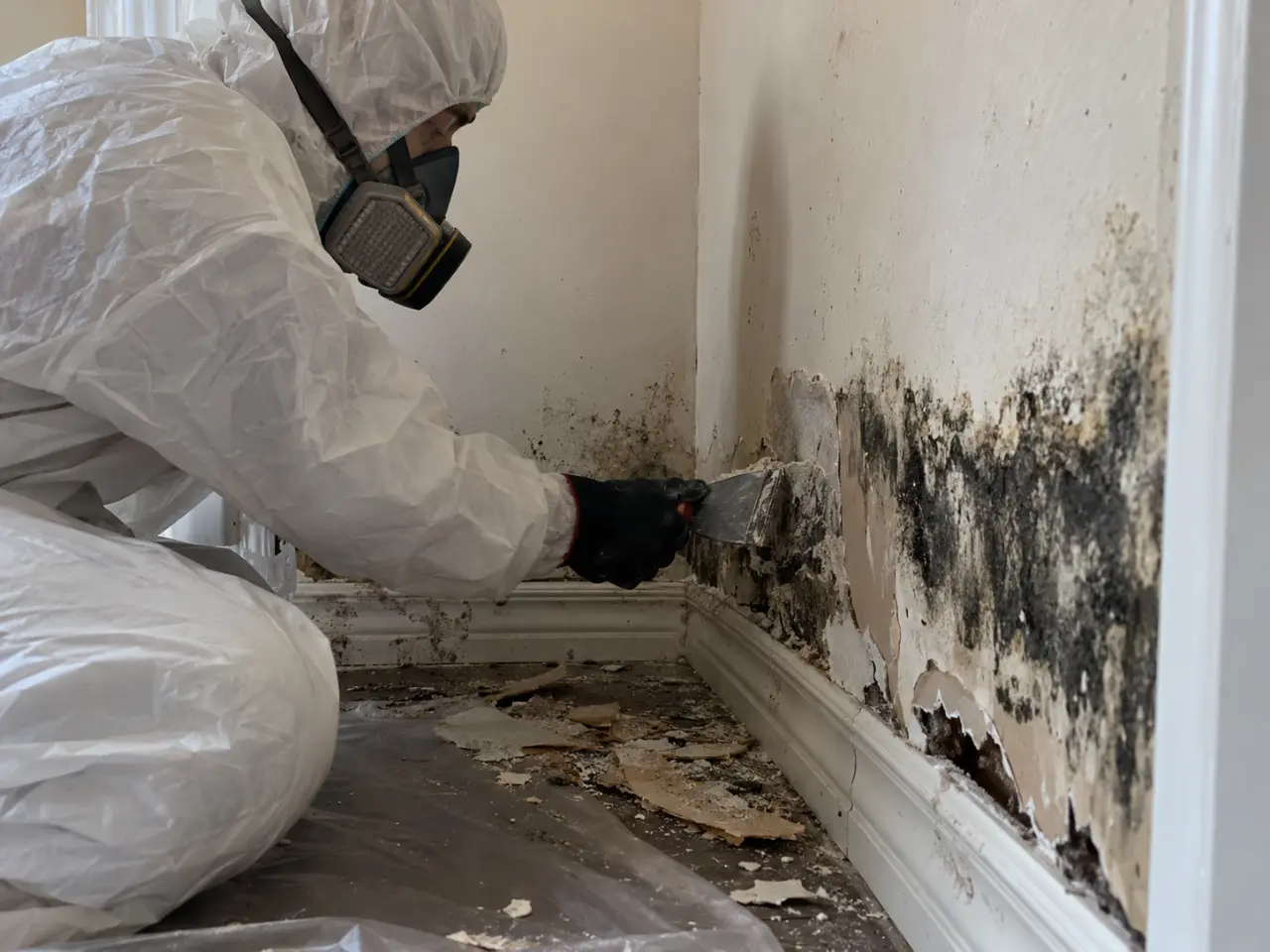
A hidden slab leak causes mold beneath flooring in Frisco homes because water escapes under the concrete slab, saturates the soil and vapor barrier, and then wicks upward into the subfloor and the underside of your flooring - where it stays dark, warm, and wet. Mold can start colonizing that trapped material in as little as 24 to 48 hours after the leak begins, and because the moisture never dries out on its own, the colony keeps expanding until someone stops the water and removes the contaminated material.
We have torn out enough swollen laminate and buckled engineered hardwood in Frisco to know the pattern. This post covers why slab leaks feed mold under floors, the warning signs, how fast it happens, how to confirm it, and what remediation actually involves.
Why a Slab Leak Feeds Mold Under Your Floor
A slab leak is a pinhole or joint failure in a copper or PEX supply line, or in a drain line, that runs beneath the post-tension slab common in Frisco construction. Because the pipe sits under 4 to 6 inches of concrete, the water has nowhere to go but sideways into the soil and upward through the slab's capillaries.
That upward path is the problem. Water vapor migrates through the concrete, hits the plywood or OSB subfloor, and gets trapped between the subfloor and the flooring above it. Under tile, the moisture sits in the thinset and backer board. Under laminate or engineered wood, it soaks straight into the core. Either way, you have created a humid microclimate that never sees airflow and never sees sunlight - the two things that stop mold.
Frisco's expansive clay soil makes this worse. When the soil under a slab swells and shrinks with our wet springs and dry summers, it shifts the slab and stresses the pipes running through it. That is why we see clusters of slab leaks in neighborhoods built on the blackland clay that runs through much of the city.
Once the subfloor is wet, mold has everything it needs: organic material (wood, paper facing on drywall, the cellulose in laminate cores), a food source, and a steady supply of moisture. The only missing ingredient is time - and a hidden leak gives it plenty.
Signs of Mold Under Flooring in Frisco, Texas
The signs of mold under flooring in Frisco, Texas, usually show up in this order: a musty smell first, then a soft or spongy spot, then visible discoloration at a seam or baseboard. Most homeowners notice the smell weeks before they notice anything they can see.
Here is what we tell people to watch for:
- A musty, earthy smell that will not go away. If opening windows for a day does not clear it, the source is under the floor, not in the air.
- A warm spot on the floor. A hot-water line leak heats the slab from below. If one tile or one 3-foot section of floor feels warmer than the rest, that is a strong slab leak signal.
- Cupping, buckling, or crowning. Wood flooring cups when the underside gets wetter than the top. Laminate planks may lift at the seams.
- Discoloration along seams and baseboards. Dark staining at the edges of planks or where the floor meets the wall is often the first visible mold.
- A spike in your water bill. An unexplained jump of $40 to $150 in a month, with no change in habits, points to a leak you cannot see.
- Allergic symptoms that improve when you leave the house. Sneezing, itchy eyes, and congestion that ease up at work but return at home are worth investigating.
If you are seeing two or more of these, the next step is a proper look at what is happening under the floor. Our Mold Inspection Frisco TX service uses moisture meters and thermal imaging to map exactly where the wet zone is before we cut anything open.
How Soon Can Mold Grow After a Slab Leak?
Mold can begin growing within 24 to 48 hours of a slab leak starting, and visible colonies typically appear in 7 to 21 days if the moisture stays trapped. The exact timeline depends on three things: how warm the space is, how much organic material is wet, and whether air is moving.
In a Frisco home during summer, when indoor temperatures sit at 74 to 78 degrees and humidity climbs, that timeline compresses. We have opened floors 10 days after a leak started and found full colonization on the underside of the subfloor. In a cooler, drier month, the same leak might take three weeks to show the same growth.
The key point: by the time you smell it, the mold has been growing for a while. A slab leak that ran undetected for two months does not produce a two-day-old problem. It produces a mature colony with spores that have already spread into the air and settled on nearby surfaces.
That is why we treat every slab leak mold job as two problems - the water and the contamination - and we do not consider the job done until both are handled.
How to Find Mold Under Flooring After a Slab Leak in Frisco
Finding mold under flooring after a slab leak in Frisco means confirming two things separately: where the water is coming from, and how far the mold has spread. Skipping either step leads to a callback.
Here is the sequence we run:
- Locate the leak. A licensed plumber pressurizes the system or runs acoustic and thermal detection to pinpoint the failed line. We do not open a floor until we know where the water is entering.
- Map the moisture. We use pin-type and pinless moisture meters plus infrared imaging to trace the wet zone across the slab. Moisture often travels 6 to 10 feet from the actual leak point.
- Test the air and surfaces. Air sampling and surface sampling tell us what type of mold is present and how concentrated it is. This matters because Black Mold Removal Frisco TX requires different containment than a common Cladosporium problem.
- Open a test area. We pull back a small section of flooring at the wettest point to see the actual condition of the subfloor and the underside of the flooring. This is the only way to know whether the material can be dried or has to go.
- Dry the structure. If the subfloor is salvageable, we set up Structural Drying and Dehumidification Frisco TX equipment to pull moisture out of the slab and framing before any rebuild.
Once the structure is dry and the mold is removed, we rebuild. That can mean new subfloor, new flooring, and in some cases drywall repair where the moisture wicked up the wall. Our Mold Damage Repairs and Reconstruction Frisco TX team handles the whole sequence so you are not coordinating three different contractors.
What to Watch Out For
The most common mistake we see is treating the smell instead of the source. Air purifiers, candles, and ozone machines mask the odor while the colony keeps growing under the floor. You are not solving the problem - you are buying time you do not have.
Other traps:
- Fixing the pipe and stopping there. The plumber fixes the leak, the floor dries on the surface, and everyone assumes the job is done. The subfloor is still wet, and the mold is still there.
- Drying with box fans and open windows. Household fans move air across the surface. They do not pull moisture out of a saturated subfloor or a concrete slab. You need professional drying equipment with monitored moisture readings.
- Assuming homeowners insurance covers everything. Most Texas policies cover the water damage from a sudden slab leak but exclude the pipe repair itself and often exclude long-term mold that was not addressed promptly. Document everything from day one.
- Reinstalling new flooring over a wet subfloor. This is the most expensive mistake on the list. New hardwood installed over damp OSB will cup within weeks, and the mold comes right back.
- Ignoring a second leak. Slab leaks often come in pairs. If one line failed, the others are the same age and the same material. We always recommend a full pressure test after the first repair.
We also see this pattern in older Frisco neighborhoods where the original plumbing is now 25 to 30 years old. If you are in Mold Remediation in Stonebriar or the surrounding areas, and your home was built in the 1990s, a slab leak is not a matter of if - it is a matter of when.
When to Call a Professional
Call a professional the moment you confirm a slab leak, not after you see mold. The window between the leak starting and the mold taking hold is short, and every day you wait adds scope to the job.
You should call us if:
- You have a confirmed slab leak and any soft, warm, or discolored flooring.
- You smell mustiness that returns within hours of airing the house out.
- You see visible dark staining at floor seams, baseboards, or around floor vents.
- Your water bill jumped and you cannot find a fixture leak.
- Anyone in the home has worsening allergies or respiratory symptoms that ease when they leave.
At Frisco Mold Shield, we handle the mold side of the job from inspection through rebuild. We test, contain, remove, dry, and repair - and we document everything for your insurance claim. If you are not sure whether you have a problem, we will tell you honestly. A 45-minute inspection is a lot cheaper than a full floor replacement.
For homes in the newer master-planned communities, we also recommend a moisture-control plan after any slab repair. Our Mold Prevention and Moisture Control Frisco TX service includes vapor barrier checks, humidity monitoring, and a maintenance schedule that keeps the subfloor dry year-round.
Frequently Asked Questions
Can a hidden slab leak cause mold beneath flooring?
Yes. A hidden slab leak releases water under the concrete, which wicks up into the subfloor and the underside of your flooring. That trapped moisture creates ideal conditions for mold, and because the leak is hidden, the problem often goes undetected for weeks or months.
How can I tell if there is mold under my Frisco home's floor?
The earliest sign is usually a musty smell that does not clear when you ventilate the house. Other indicators include a warm spot on the floor, cupping or buckling planks, dark staining at seams, and allergy symptoms that improve when you leave home. A moisture meter and thermal camera confirm it in minutes.
How soon can mold grow after a slab leak?
Mold can start growing in 24 to 48 hours after a slab leak begins, and visible colonies typically appear within 7 to 21 days. In warm, humid Frisco summers, that timeline runs faster - we have seen full colonization on subfloors just 10 days after a leak started.
Does mold under flooring require professional remediation?
Yes, in almost every case. Mold under flooring sits in a concealed space you cannot clean with household products, and disturbing it without containment spreads spores through the house. Professional remediation removes the contaminated material, dries the structure, and verifies the air is clean before rebuild.
Who should inspect a Frisco home after a slab leak?
You need two people: a licensed plumber to locate and repair the pipe, and a mold remediation company to assess and treat the contamination. We coordinate with your plumber so the leak is fixed first, then we handle testing, removal, drying, and reconstruction in one sequence.
Get Help with Mold Remediation in Frisco
If you have a slab leak and you are seeing any of the signs above, do not wait for the floor to fail. We will inspect the moisture, test for mold, and give you a clear plan with upfront pricing before any work starts.
Call Frisco Mold Shield at (469) 746-9038 to schedule your inspection. We serve homeowners across Frisco, including Mold Remediation in Phillips Creek Ranch and every neighborhood in between.